How to choose the best photo for a pet portrait
One of the questions I'm asked most often is: “Is this photo good enough for a portrait?”
The good news is that you don't need a professional photograph. Many of the pet portraits I create begin with ordinary mobile phone photos taken at home, in the garden or out on a walk.
What matters most is whether the photograph clearly shows the features that make your pet recognisable - particularly their eyes, markings, colouring and familiar expression.
And the technically “best” photograph isn't always the right one. A slightly imperfect photo that immediately feels like your pet can often be a much better starting point than a perfectly lit image that doesn't quite look like them.
In this guide, I'll show you what I look for when choosing a reference photograph, what can make an image more difficult to work from, and what to do if the photographs you have aren't perfect.
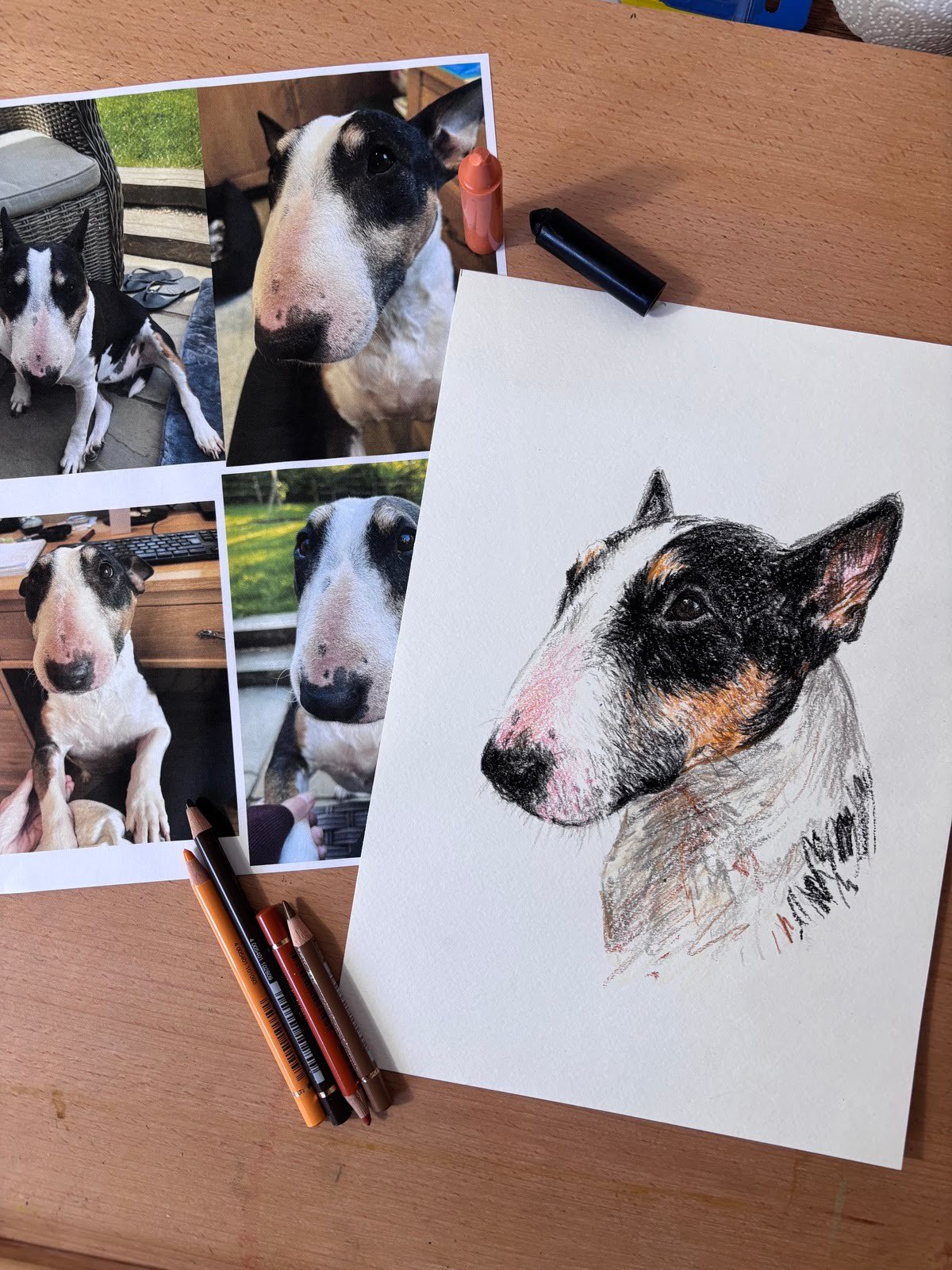
Original dog photographs displayed beside a finished hand-drawn pet portrait
What makes a good reference photo?
The best reference photograph doesn't need to be professional. It simply needs to give me enough clear information to create a strong, recognisable likeness.
When choosing your photographs, look for:
Clear, sharp eyes – these are particularly important for recreating a familiar expression.
Natural light – this helps show accurate coat colours, markings and facial detail.
An eye-level angle – this usually gives the most natural view of your pet's proportions.
Visible features – ideally, the eyes, ears, muzzle and distinctive markings should be easy to see.
Good coat detail – enough clarity to understand the direction, texture and colouring of the fur.
A familiar expression – most importantly, choose a photograph that genuinely looks like your pet.
Don't worry if one photograph doesn't tick every box. I can often use additional images to check details such as colouring, markings or features that aren't completely clear in the main reference.
1. Choose the photo that looks most like them
When choosing between several photographs, start with a simple question:
Which one looks most like your pet?
It might not be the sharpest photograph or the one with the best lighting. Often, the strongest reference is simply the image that shows the expression, head position or look you immediately recognise.
That matters because I can work around some photographic limitations. Other reference images can help me understand coat colour, markings or details that aren't completely clear in the main photograph.
What is much harder to replace is that familiar expression.
So if you have one beautifully photographed image and another slightly imperfect phone photo that makes you think “that's them”, don't automatically dismiss the second one.
Send both. The more I can see, the better I can advise which photograph will make the strongest starting point for your portrait.
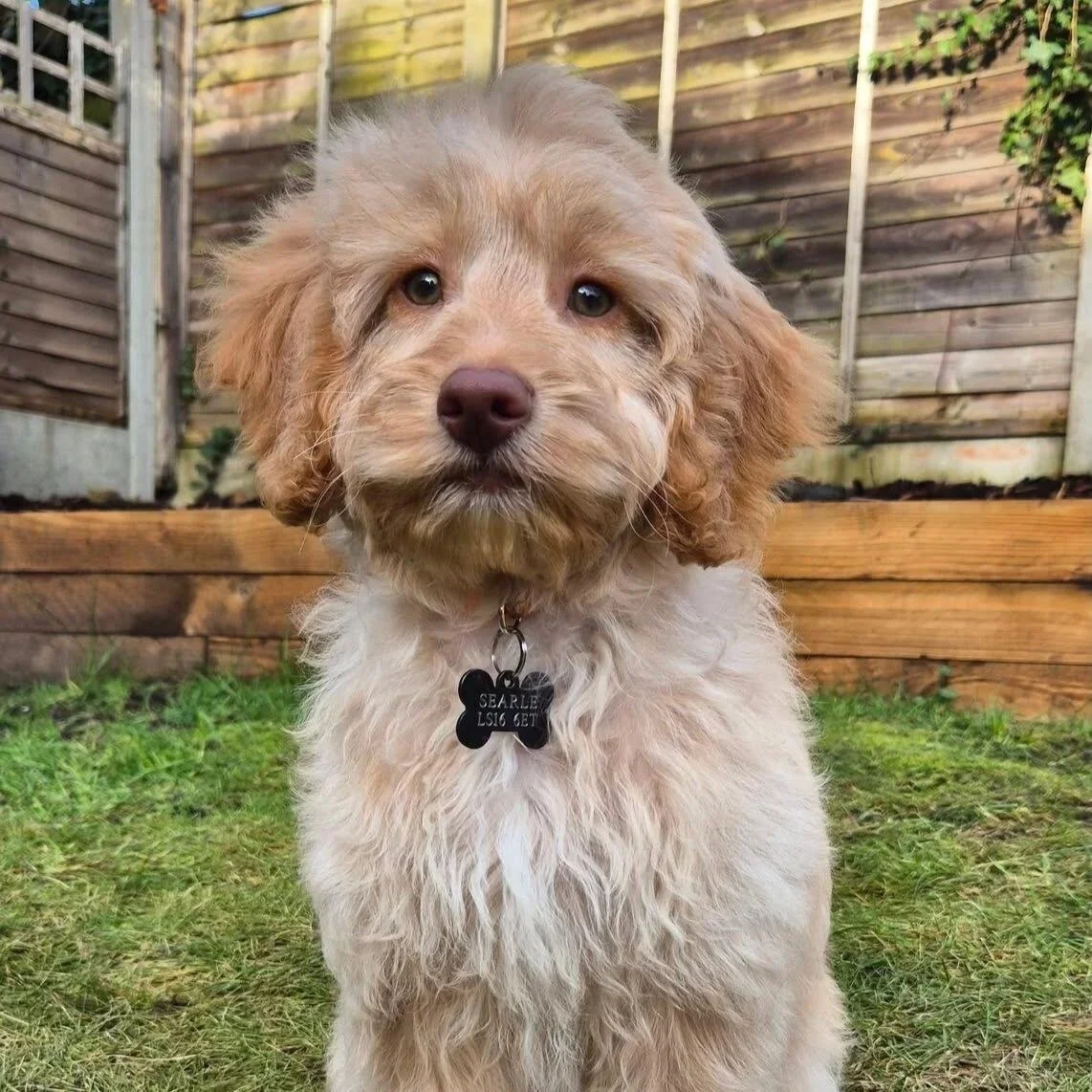
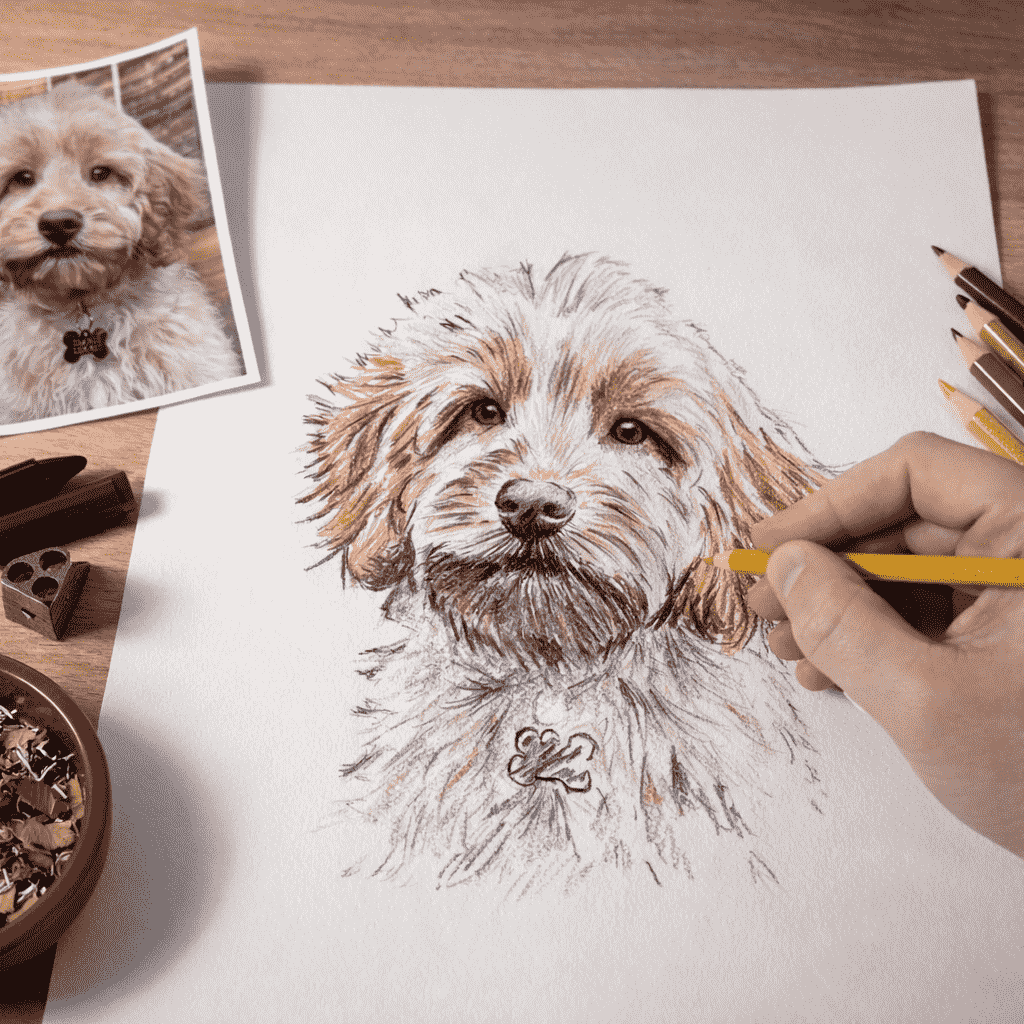
The photograph chosen for Maverick's portrait clearly showed the familiar expression his owners recognised.
See how Maverick's portrait was created
2. Natural light makes a big difference
Good natural light makes it much easier to see your pet's true colouring, markings, coat texture and facial features.
You don't need specialist lighting. If you're taking new photographs specifically for a portrait, try photographing your pet:
Near a window or open doorway.
Outside on a bright but overcast day.
In soft morning or evening light.
Somewhere their face is evenly illuminated.
Try to avoid camera flash, strong artificial lighting and harsh midday sunshine. These can create deep shadows, washed-out highlights or colour casts that make your pet's natural colouring harder to judge.
This is particularly important for pets with very dark or very light coats. A black dog's features can disappear into shadow, while bright sunlight can remove subtle detail from white or pale fur.
Don't rule out a favourite photograph simply because the lighting isn't perfect, though. If it shows the expression you want, additional photographs taken in better light can often be used to help me check colouring and other details.


3. Photograph your pet at eye level
If you're taking new photographs for your portrait, try to position the camera at roughly the same height as your pet's eyes.
Photographing a dog or cat while standing above them can distort their natural proportions. The head may appear larger, the muzzle shorter and the body smaller than you're used to seeing.
Getting down to their level usually creates a much more natural perspective and gives me a clearer view of their face.
You don't need your pet to sit perfectly still or look directly at the camera. A slight turn of the head or relaxed pose can work beautifully if it shows the expression you recognise.
If you already have a favourite photograph taken from slightly above or below, don't automatically rule it out. Different angles can still work - the important thing is whether the photograph gives me enough information to create the portrait you want.
4. Make sure the eyes are clear
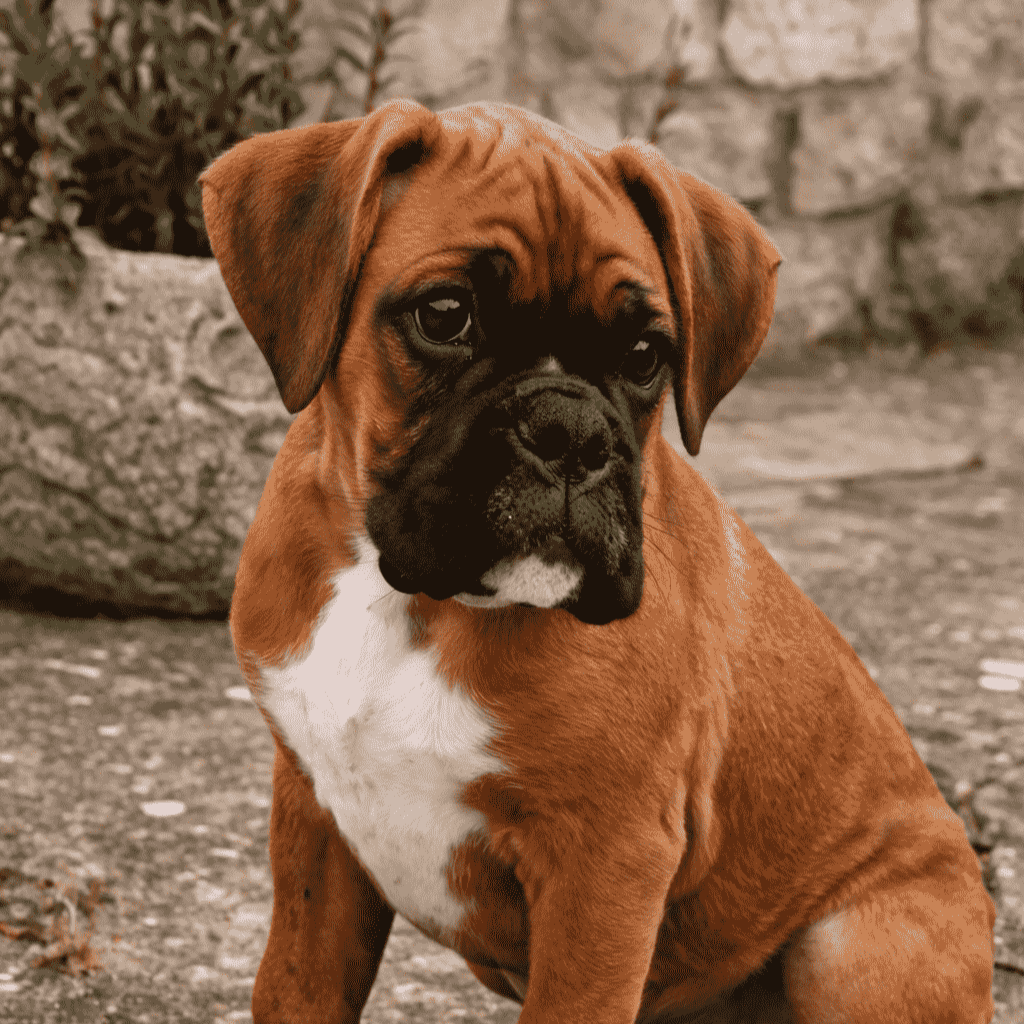
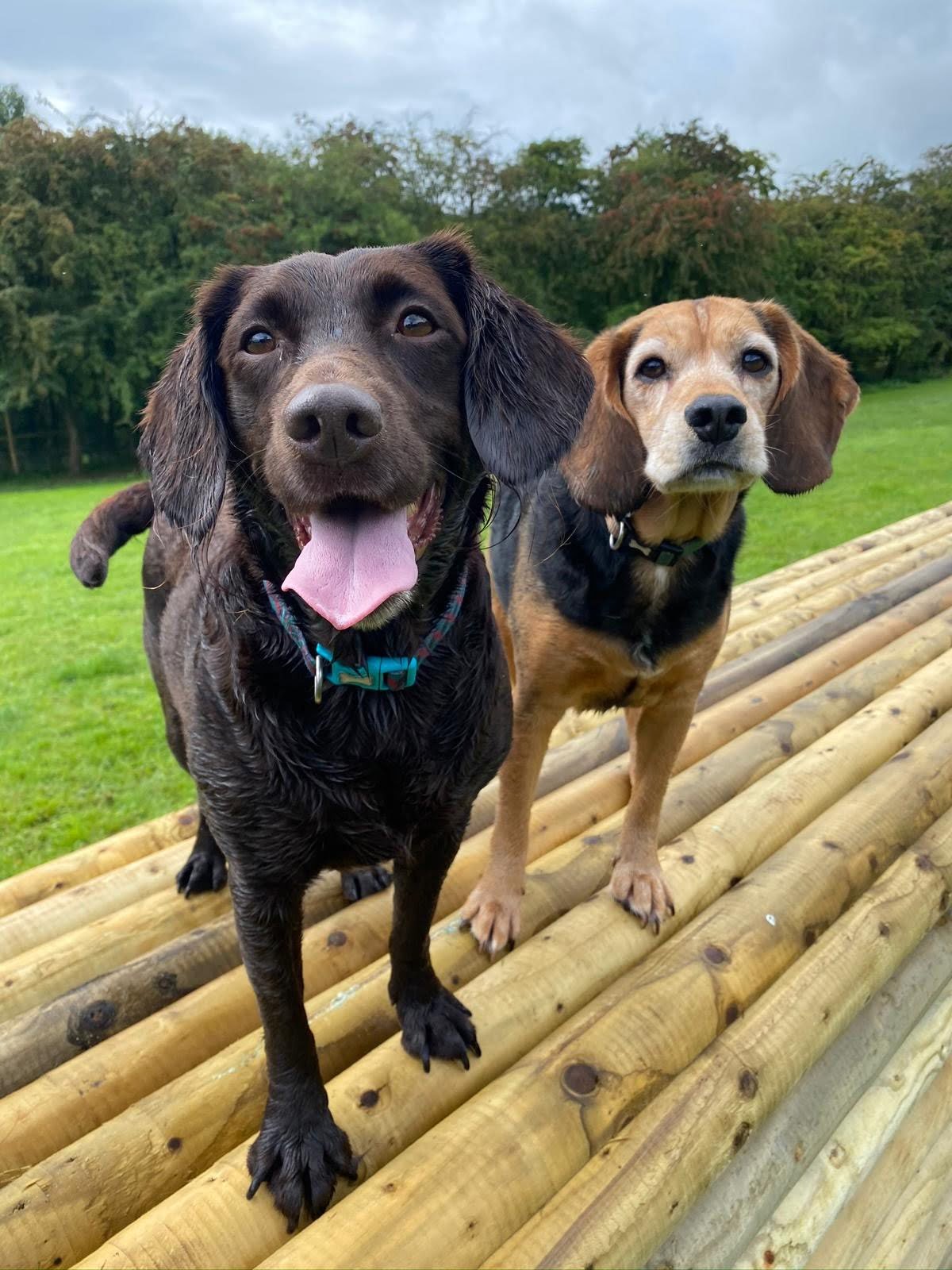
The eyes are one of the most useful parts of a reference photograph because they play such an important role in your pet's familiar expression.
Ideally, both eyes should be clear and reasonably sharp, with enough detail for me to see their shape, colour and the direction your pet is looking.
If you're taking a new photograph on your phone, tap on your pet's eyes on the screen before taking the picture. This tells the camera where you want it to focus.
Don't worry if the surrounding fur isn't perfectly sharp. I can often interpret coat texture and other details using additional photographs.
Blurred or obscured eyes are more difficult because there is less reliable information to work from. If your favourite photograph has this problem, send other images showing the eyes more clearly - I may be able to use those as supporting references.


5. Make sure important features are visible
A strong reference photograph should give me a clear view of the features that make your pet recognisable.
Ideally, I should be able to see:
The shape and position of the eyes
The ears and their natural shape
The muzzle, nose and mouth
Distinctive markings and colouring
The overall shape of the head and face
Try to avoid photographs that crop tightly through important features, particularly the ears or top of the head. If part of your pet is missing from the photograph, there is less visual information for me to work from.
That doesn't necessarily mean the photograph can't be used.
If your favourite image has a cropped ear, unclear marking or another missing detail, additional photographs can often provide the information I need. They don't need to show the same pose - they can simply help me understand what that feature should look like.


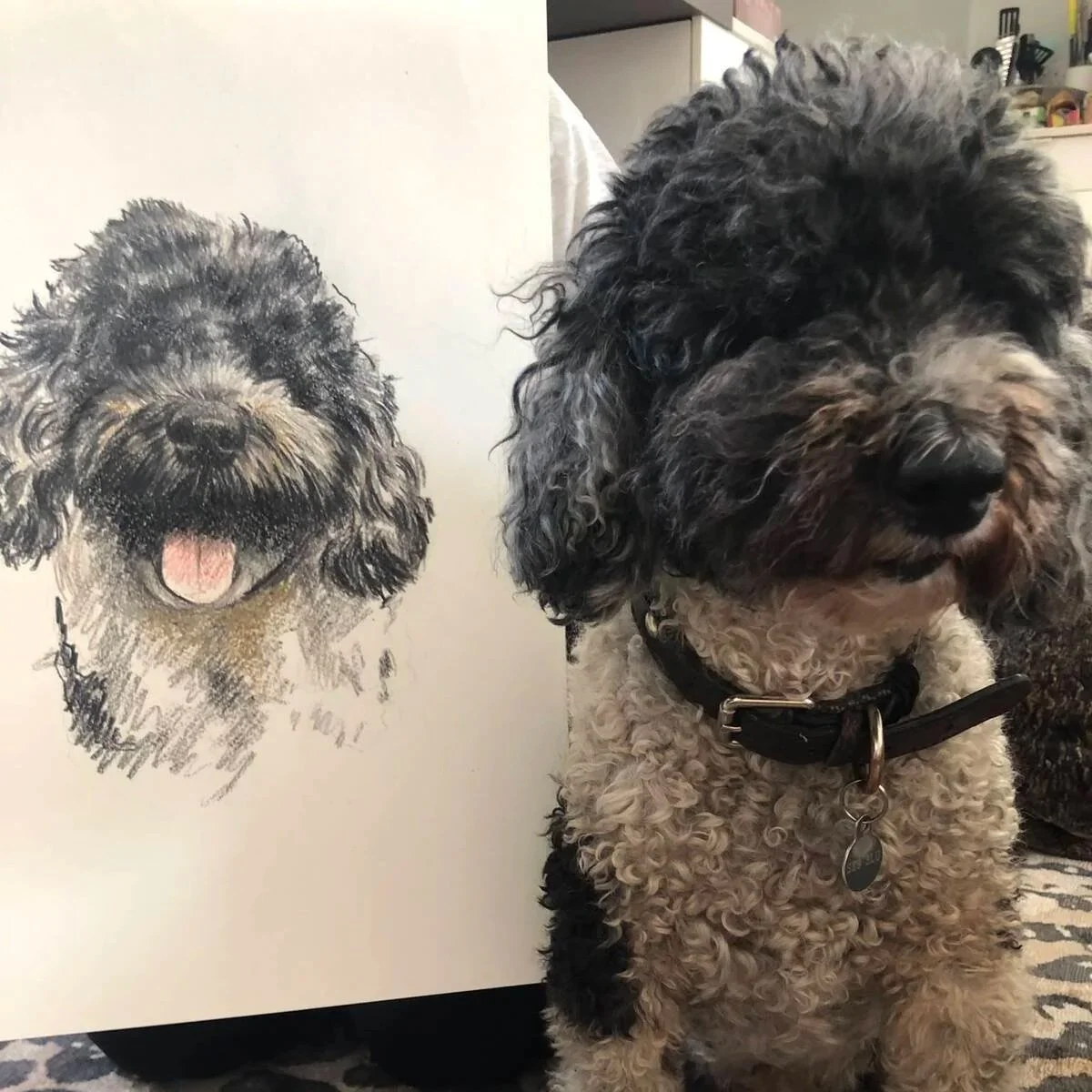
Additional photographs can help provide details that aren't clearly visible in the main reference image.
See how Noodle's portrait was created
6. Don’t worry too much about the background
A simple background can make your pet easier to see, but it doesn’t need to be clean, plain or perfectly composed for me to create a portrait from it.
Your favourite photograph might have been taken on the sofa, during a walk or in the middle of a cluttered room. If your pet’s face and important features are clear, the surroundings usually aren’t a problem.
My portraits are created with a clean white background, so distracting objects and scenery from the original photograph don’t need to appear in the finished artwork.
If you’re taking new photographs specifically for a portrait, a relatively simple background can still be helpful because it makes the outline of your pet easier to distinguish - particularly around the ears and coat.
But when choosing between photographs, I’d prioritise your pet’s expression, clarity and likeness over the background every time.
7. Send more than one photo if you’re unsure
You don’t need to decide on the perfect reference photograph before getting in touch.
If possible, I recommend sending two to four photographs. This gives me more information about your pet and helps me identify the strongest image to use as the main reference.
One photograph might have the expression you love, while another gives me a clearer view of their:
Eye colour and shape
Coat colour and markings
Ears and facial features
Fur texture and length
Natural proportions
I’ll normally choose one photograph as the main reference, then use the others to check details where needed.
In some cases, elements from supporting photographs can also help where something isn't quite right in the main image.
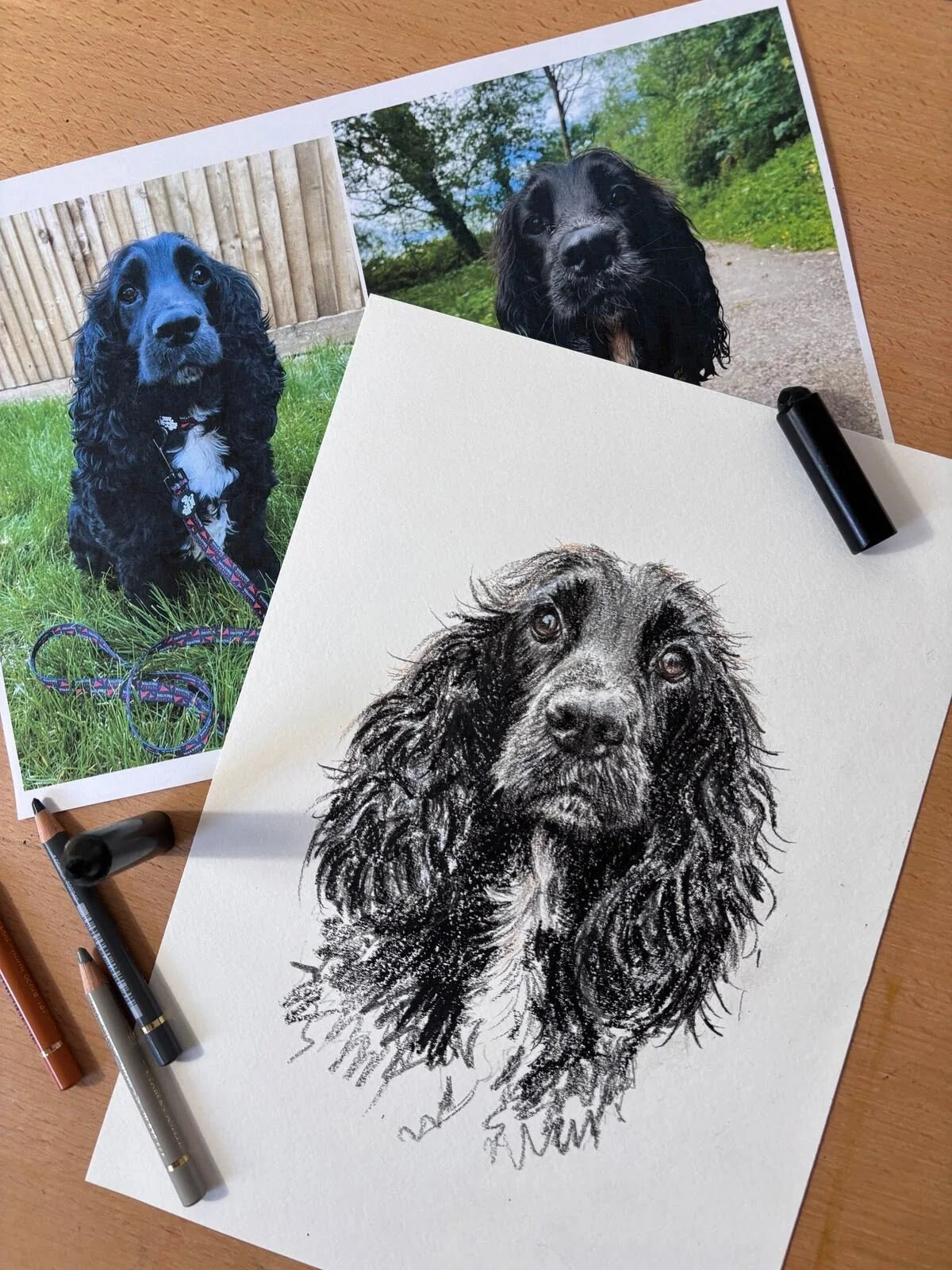
Multiple reference photographs used for creating a hand-drawn pet portrait
Can I use an older or lower-quality photograph?
Yes. Some of the most meaningful portraits I create begin with photographs that are far from technically perfect.
This is particularly common with memorial pet portraits, where taking a new photograph simply isn't possible. The best available image might be an older phone photo, a screenshot or even a photograph of a printed picture.
The most important question is whether I can still see enough of your pet's features, markings and familiar expression to create a recognisable likeness.
Older or lower-quality photographs can be more challenging when they contain:
Heavy blur or very low resolution
Strong shadows or overexposure
Important features hidden from view
Very small or heavily cropped images
Filters that alter the original colours
But none of these automatically means a portrait isn't possible. If you have other photographs - even if they're not images you'd choose for the finished pose - send those too. They can help me check details that aren't clear in the main reference.
Real example: Dudley
Dudley's memorial portrait was created from an older mobile phone photograph that wasn't technically perfect, but it still contained the familiar expression and features needed to create his portrait.
Additional information in the photograph could then be interpreted carefully during the drawing process rather than dismissing an important image simply because of its age or quality.
If you're considering a portrait in memory of a pet, you can also find more specific guidance on my Memorial Pet Portraits page.
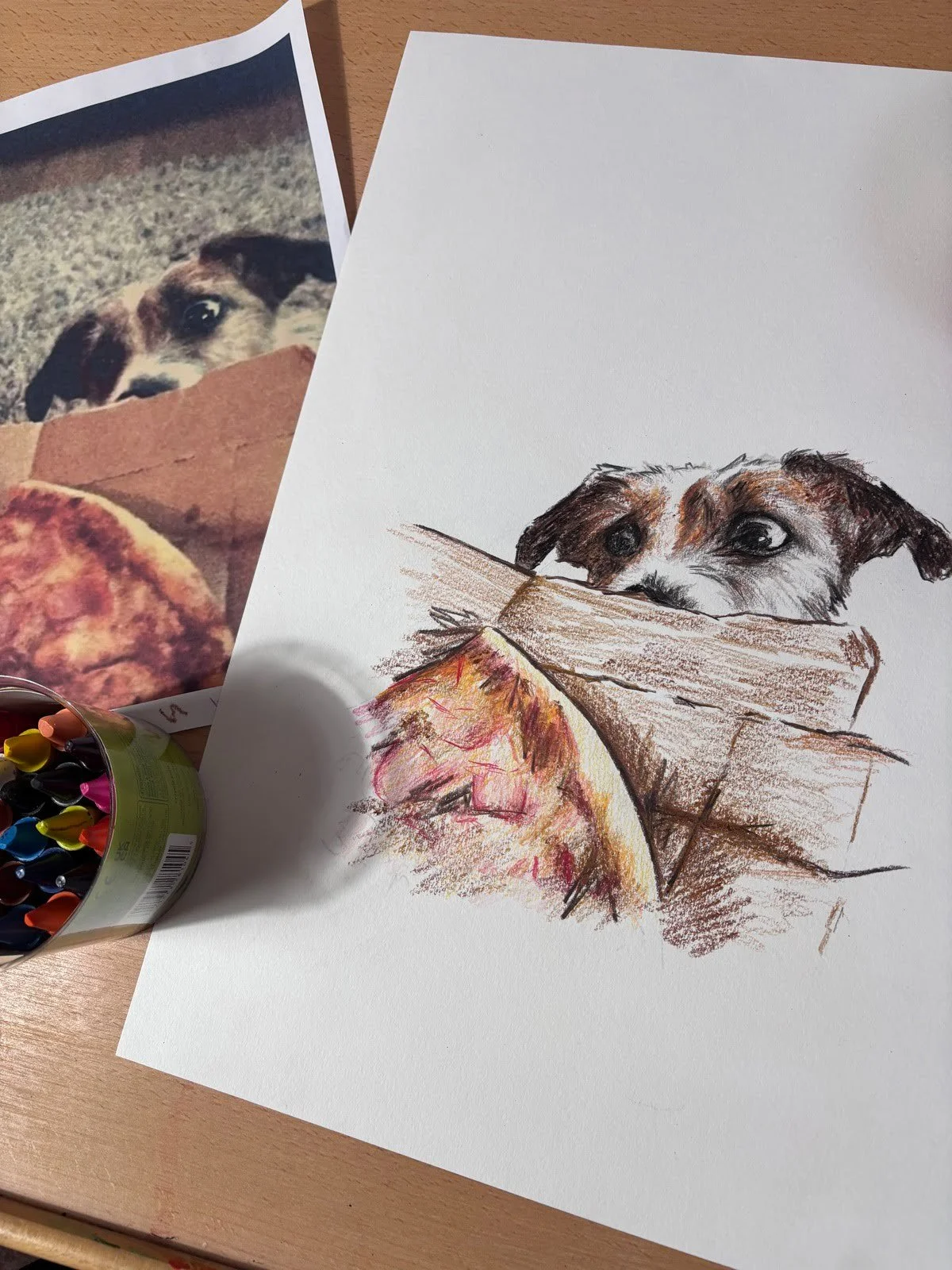
Hand-drawn memorial pet portrait created from an older mobile screenshot
Can different photographs be combined?
Yes. I can sometimes use information from more than one photograph when a single image doesn't show everything needed for the finished portrait.
There are two slightly different ways this can work.
Using supporting photographs
One photograph will usually remain the main reference for your pet's pose and expression, while additional images can help me check details such as colouring, markings, eyes or features that aren't completely clear.
This is often preferable to trying to combine lots of different photographs unnecessarily, as the main reference keeps the finished portrait feeling natural and consistent.
Bringing multiple pets together
Separate photographs can also be used when creating a portrait of two or more pets who weren't photographed together.
In this case, I carefully consider the angle, proportions and positioning of each pet so they can be brought together into one balanced composition.
Rocky, Dutch and Jessie were each drawn from separate reference photographs before being brought together in a single three-dog portrait.
See Rocky, Dutch & Jessie's Portrait Story
If you're considering a portrait of several pets, you don't need to work out which photographs will fit together yourself. Send me the images you have and I can advise what's likely to work best.
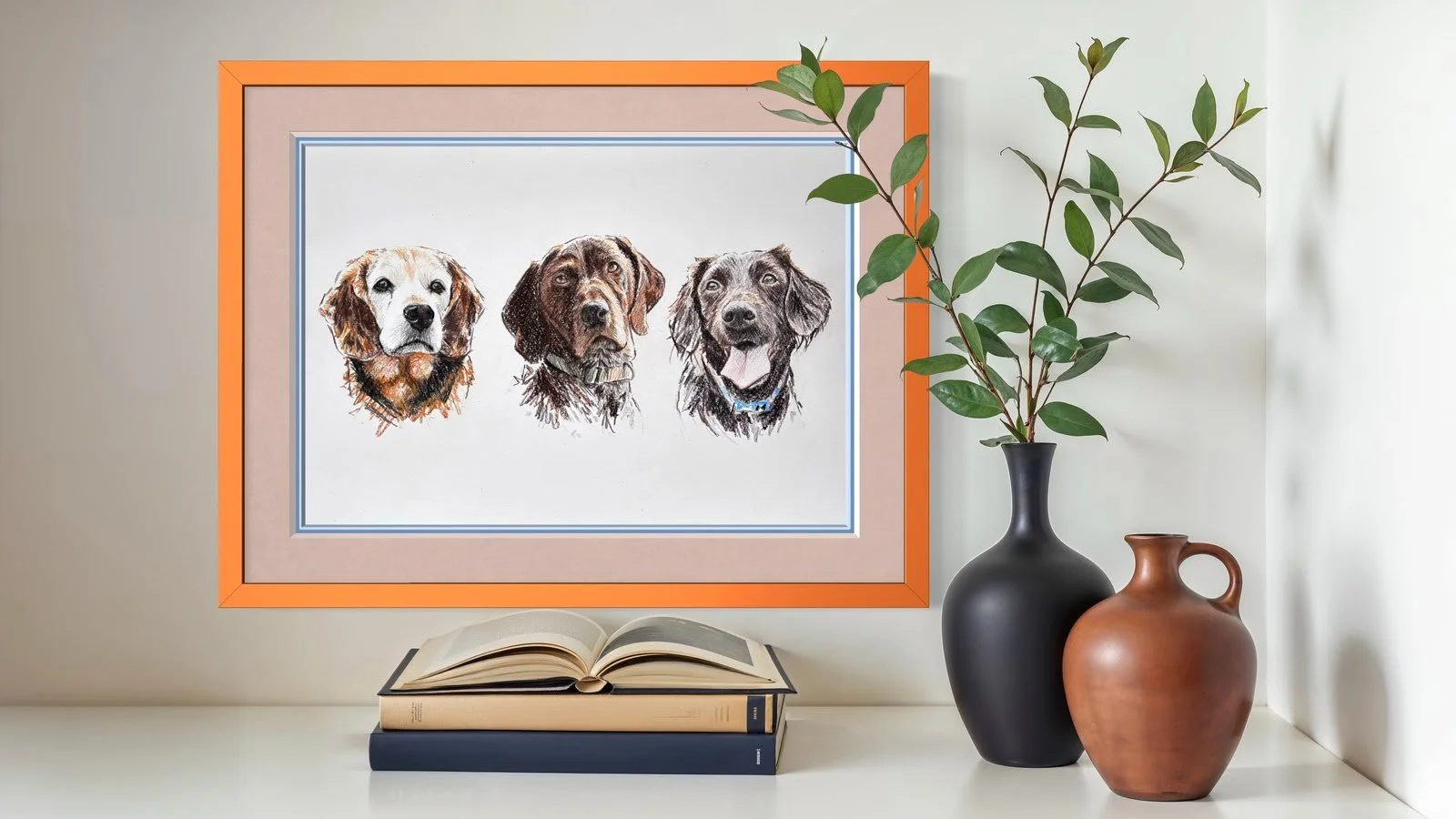
Three individual reference photographs - finished three-dog portrait
Good reference photo vs a more difficult photo
There isn't a strict pass or fail when choosing a photograph. Some images simply give me more information to work from than others.
A strong reference photo
Clear, visible eyes
Natural, even lighting
Taken around eye level
Important features visible
Useful coat and colour detail
A familiar, recognisable expression
A more difficult reference photo
Blurry or heavily pixelated
Strong flash or deep shadows
Taken from an extreme angle
Ears or features cropped out
Heavily filtered or edited
Pet very small within the image
A photograph doesn't need to meet every point in the first list to be suitable.
If the image you love falls into the second list, don't automatically rule it out. Supporting photographs can often provide missing detail, and I'll always advise what's possible before you commission.
What if I can’t choose which photograph to use?
You don’t need to make the final decision yourself.
If you have several favourite photographs, send me two to four of the strongest options and I’ll help you decide which will work best for your portrait.
I’ll look at things such as:
How clearly I can see your pet’s features
The quality and direction of the light
Their expression and overall pose
How much useful detail the image contains
Whether another photograph can provide any missing information
Most importantly, I’ll consider which photograph gives us the strongest starting point for creating a portrait that feels recognisably like your pet.
Sometimes the choice is obvious. Other times, one photograph provides the best pose and expression while another is useful for checking details such as eye colour or markings.
So if you’re unsure, send the photographs rather than ruling any out yourself. I’m always happy to take a look and tell you what I think will work best.
Frequently asked questions
-
No. Many of my portraits are created from everyday phone photographs. Clear features, useful detail and a familiar expression are more important than professional photography.
-
Absolutely. Modern phone photographs can make excellent reference images, particularly when they're taken in natural light and your pet's face is clearly visible.
-
Yes. I recommend sending two to four photographs where possible. I'll help you choose the strongest main reference and use others to check additional details if needed.
-
Yes. Older photographs can often be used, particularly for memorial portraits. Send me the best images you have and I'll advise what's possible.
-
Not usually. My portraits have a clean white background, so a distracting background in your photograph doesn't need to appear in the finished artwork.
-
Yes. Supporting photographs can help with missing details, and separate photographs can also be used to bring multiple pets together in one portrait.
-
Don't automatically rule it out. Send me the photograph along with any other images you have, and I'll let you know whether there's enough information to work from.
-
Send me two to four of your favourite options and I'll help you choose the photograph that gives us the strongest starting point.
Continue reading
Ready to learn more? These pages cover what happens next, show real photographs used for previous commissions and explain portrait sizes and prices.
How to commission a pet portrait
See how the commission process works, from sending your photographs through to receiving your finished hand-drawn portrait.
Real portraits from photos
Explore real commissions and see the reference photographs, drawing process and finished artwork behind individual pet portraits.
Portrait sizes & prices
Compare A5, A4 and A3 portrait sizes, see current prices and find out exactly what's included with your commission.
Ready to turn your favourite photo into a portrait?
You don't need to find the perfect photograph before getting started.
If you have a favourite image - or a few you're choosing between - send them over and I'll help you decide what will work best.
Every portrait is drawn entirely by hand from your photographs, with a strong, recognisable likeness at the heart of the finished artwork.
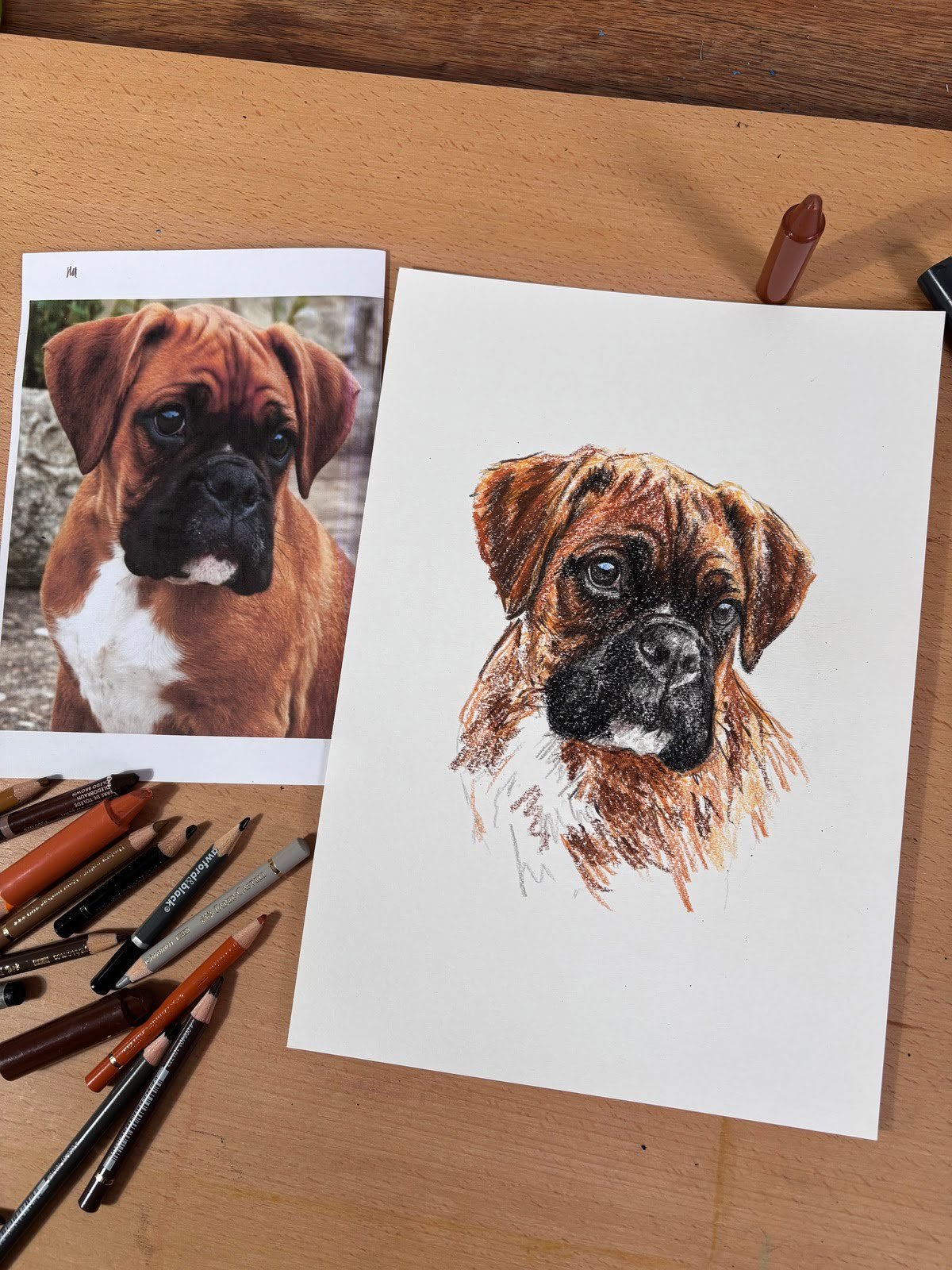
Original pet photograph displayed beside a finished hand-drawn pet portrait
Some of the example images shown above were taken with permission from a local dog walking business, K9 Companions Darlington.